You are currently browsing the
Aloha! Condos, Homes and Places to Stay in Hawaii | Your Hawaii Resource and Information Blog weblog archives
for the day Monday, August 4th, 2008.
How the Hawaiian Islands Formed
The Hawaiian Islands formed because of volcanic activity in the Pacific Ocean. The resulting lava eruptions created land in the middle of the ocean that is now known as the Hawaiian Islands. Birds, water, and air currents carried seeds across the ocean to the newly formed Hawaiian Islands and vegetation began to grow.
Birds and sea animals migrated to the islands as well over the centuries. It is not known exactly when man discovered the Hawaiian Islands, but many experts believe that the first Hawaiian settlers arrived sometime between 300-400 AD.
How Volcanic Activity Occurs
Teutonic plates cover the earth’s surface and float along on molten magma. These plates are constantly in motion. As plates shift, cracks and openings are formed where two plates meet that allow the molten magma to escape to the surface.
In the case of the Hawaiian Islands, the Pacific Plate is situated over a hotspot where magma is especially forceful. This Hawaiian Hotspot forces lava through the center of the Pacific Plate, resulting in a high number of volcanoes in the area.
When a volcano is born, the erupting lava can burst high into the air, or present as a trickle down the sides of the opening. The erupting magma is also comprised of a variety of different substances, which in turn affects the way the lava erupts or flows.
The volcanoes forming the Hawaiian Islands contain a high level of basalt, resulting in more fluid lava flows. The Hawaiian volcanoes generally have gently sloping sides from years of lava trickling from the volcanoes’ opening.
The Hawaiian Islands will continue to grow in size as further eruptions add more lava to the landscape, but the shoreline is also continually altered by erosion from wind, rain, and the sea. A series of older islands, known as the Emperor seamounts, is located under the surface of the sea to the northwest of the Hawaiian Islands. Older, now inactive, volcanoes also formed these islands.
The Hawaiian Island Volcanoes
Nearly 100 volcanoes are believed to be present in the area near the Hawaiian Islands. Eighteen of those are responsible for forming Hawaii as we know it today. The Islands are situated over the Hawaiian Hotspot, an area of erupting molten lava in the Pacific Ocean. As the Teutonic plate containing the Hawaiian Islands moved east, the Hawaiian Hotspot created a new island in the chain.
The Big Island of Hawaii is currently situated over the Hawaiian Hotspot. As the plate moves away from the Hotspot, the volcanoes become less active until lava is no longer able to reach the volcano’s opening.
Five volcanoes, Kilauea, Mauna Loa, Mauna Kea, Hualalai, and Kohala, formed the Big Island of Hawaii. The Hawaiian Islands are currently home to three active volcanoes, Kilauea, Mauna Loa, and Loihi. Mt. Kilauea has been actively erupting since 1983. Mt. Mauno Loa last erupted in 1984 and experts believe it is building for a new eruption sometime in the next few years. Mt. Loihi last erupted in 1996.
As time passes on, new islands will be formed in the Hawaiian Island chain as new volcanoes are born over the Hawaiian Hotspot.
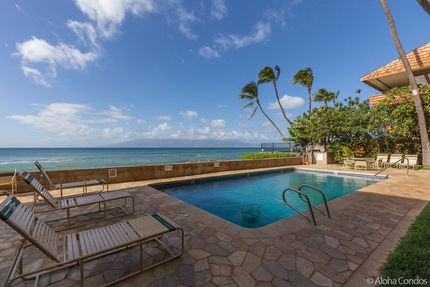
Maui Beach Condo Vacations
Maui, also called the Valley Isle, is Hawaii’s second largest island. It has an area of 1,886 square kilometers with a population of approximately 120,000 people. Its world class waves make the island one of the world’s best vacation spots.
Whether you are taking a vacation or going for a longer period of time, […]